Showing posts with label Technical Textiles. Show all posts

Tuesday, 4 August 2015

'Q&A’s We Can All Learn From'

[Vision Creates Value is delighted to present Matt Reid's insightful interview.]

by Joe Geng

Matt Reid is a High Performance Textiles Manager at DSM Dyneema. He has 20 years experience in the glove industry and Hand Protection Authority.

Matt Reid

1.        Joe Geng (JG): When you walk through a facility, what are the biggest mistakes you see Safety Manager’s making with regard to their hand protection programs?

Mathiew Reid (MR): The biggest problem I see is overcompensation. Safety Manager’s have too much information coming at them, so when it comes to gloves they tend to go to the highest level of cut protection, ANSI level 5, even when it is not needed or even desirable.   This is often not a good thing because cut level 5 gloves are often stiff and inflexible, so they are choosing a glove that people simply won’t wear.  I actually saw this very recently in a facility that was handling sheet metal.  The workers literally had the gloves in their pockets, and quickly put them on when they saw the Safety Manager, because they literally could not do their jobs with the gloves provided to them.

Safety Manager’s need to consider test results as one reference point in their decision, but not trust blindly in the test results alone.  Choosing the right hand protection for a facility needs to more be than simply a ‘checking the box’ exercise.

The best way to solve this is simply put more emphasis on hand protection.  Hand injuries are the #1 preventable hand injury in the work place.  In our Zero Excuses campaign we stress that something is obviously missing if there are still millions of recordable hand injuries every year in this economy.  Some of those injuries are traumatic and life altering.  Often Safety Managers feel that there is PPE and gloves, but that is the wrong attitude.  Gloves should be considered as important a safety item as fall protection or respiratory protection.  Safety Managers don’t need to be glove experts but they should be knowledgeable enough to have a conversation with a manufacturer about gloves, test methods, and hand protection in general.


2.        JG: What are the best practices you see with regard to hand protection?

MR: The facilities that have Safety Professionals that consider hand protection as important as other PPE items, and they get to know Hand Protection such as standards, products, technologies, and the manufacturer’s who are leading the way.


3.        JG: Who is the best with regard to hand safety and what do they do?

MR: I think there is a lot of low hanging fruit here. Many industries as a whole are not using the optimal choice of hand protection, and leather is still the largest single type of glove style.  Out of necessity the food processing industry has been using high performance products for years and relatively speaking they have some of the best control measures with “turn in a glove to get a glove” and internal launder, but vending and tracking are showing up more often in general industry and the controls are vastly improving.  There is a lot of potential for vending programs to really improve hand protection.  Facilities will be able to control safety costs by controlling misuse of PPE, and in turn provide better quality hand protection for their employees.

I guarantee 8 of 10 companies are not controlling usage the way they should.  Then, one day they wake up and realize they are spending $300,000 on gloves.


4.        JG: What are some of the worst practices you’ve observed?

MR: Double or even triple gloving, which I’ve witnessed in an automotive plant.  Those workers couldn’t even bend their hands!  This of course led to other issues, such as compliance.  We (Perfect Fit) designed a Terry glove for them that had the same protection as 3 gloves combined and 4x the flexibility.

I’ve also seen facilities use the totally wrong material or fiber for the function.  I once visited a food processing facility that was using a basic standard-weight spun aramid glove.  The cut performance was not adequate, laundering the aramid based glove was difficult (not bleachable) and the durability was not good.


5.        JG: If a manufacturer was going to pay you $ 1 million dollars to reduce their hand injuries to zero in one month, what would you do to get them there in a hurry?

MR: If there is no time to design a specific glove for the application then I think it comes down to putting the resources in place for intensive assessment, training, monitoring and incentivizing.  Each position in the operation needs to be fully assessed from safety perspective such as what are potential sources of injury happen and what is the best product for the specific application. They would also need specific training for each function based on those assessments (ID the hazards, training needs to be often and repetitive and specific), regular monitoring of use (are they wearing… how is product working, what could be better) and then rewarding the team and individuals for adopting the program into everyday thinking.  Really those are the basics of any good hand protection program, it would simply be a matter of executing the basics really well.


6.        JG: What do you think hand protection will be like in 5-10 years?

MR: I think the current trend of higher performance that is lighter, more flexible, more comfortable will continue.  I think you will see material technology increase with smart materials, like materials that harden on impact, inspired by Sea Cucumbers, or gloves that can repair themselves .  Material science will drive hand protection design and improvements.

I also think you will see even more of a merger with performance hand protection and style, design, and more appealing look.  Well deigned gloves help improve compliance and reduce injuries.


7.        JG: What are your favorite instructional resources on safety?

MR: Zero Excuses website of course!  www.zero-excuses-protection.com. I tend to look at the individual websites of the market leaders in the safety industry.  There are unique differences that you can pick up on with each individual company.  I also look at the Bureau of Labor Statistics which breaks down injuries in the US by category of injury or industry segment.  My company is also part of several Safety Industry related association or groups that keeps me informed about standards, and general issues (ISEA, IGA, ANSI, EN388).

8.        JG: What are your favorite gloves you had a hand (pun intended) in developing?

MR: We worked on extending the Junk Yard Dog line at Perfect Fit (now Honeywell Safety).  That was fun because they are great gloves and had a strong brand name.  I also really like the PF 570.  At the time that glove was pushing the boundaries of cut protection and fit.

9.        JG: If you could eliminate one glove from the face of the earth which glove would it be?

MR: Leather gloves.  I’m just joking, sort of.  Leather gloves have their place but they are used in a lot of applications where they really shouldn’t be.  A lot of this is because of historical influence, “this is the glove my Dad wore when he worked here.”  It also has a manly or mucho image associated with it.  There are better options available today than leather gloves for most jobs.
:: 
Joe Geng
Vice President
Superior Glove
superiorglove.com

Published with Permission.
Acton, ON Canada

Edited and updated: 20151114

First published on Superior Glove Blog (www.superiorglove.com) on 2015 August 04.
Article Link: http://www.superiorglove.com/pages/blog/qas-we-can-all-learn-from/

Tuesday, 29 January 2013

Nike's new Flyknit Lunar1+ 80% less waste. . .

Nike's new Flyknit Lunar1+ 80% less waste. . .


Billy Hunter
Quote Left
Editor's Viewpoint
Quote Right
Knitting Industry's founder and Editor Billy Hunter is a chartered textile technologist with more than 30 years of experience in knitted textiles manufacturing, knitting machinery, research and development and textiles journalism.

NIKE: 80% less waste for new Flyknit Lunar1+

29th January 2013, Portland, OR
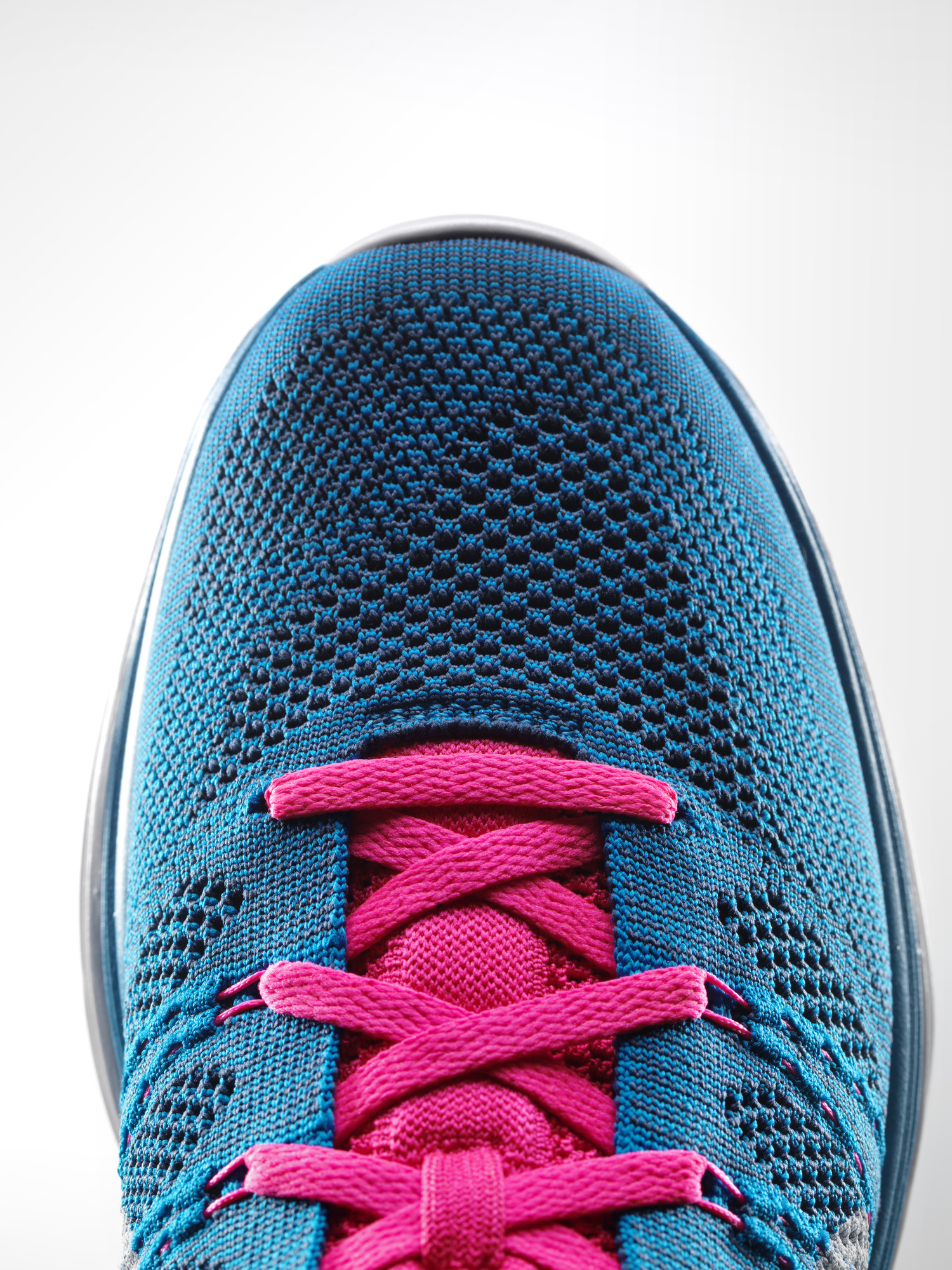
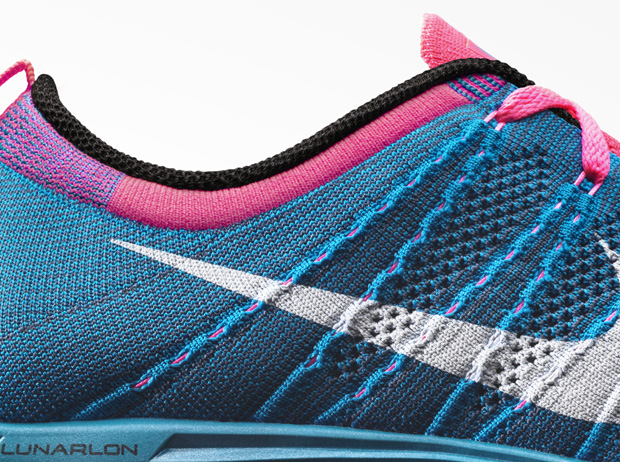
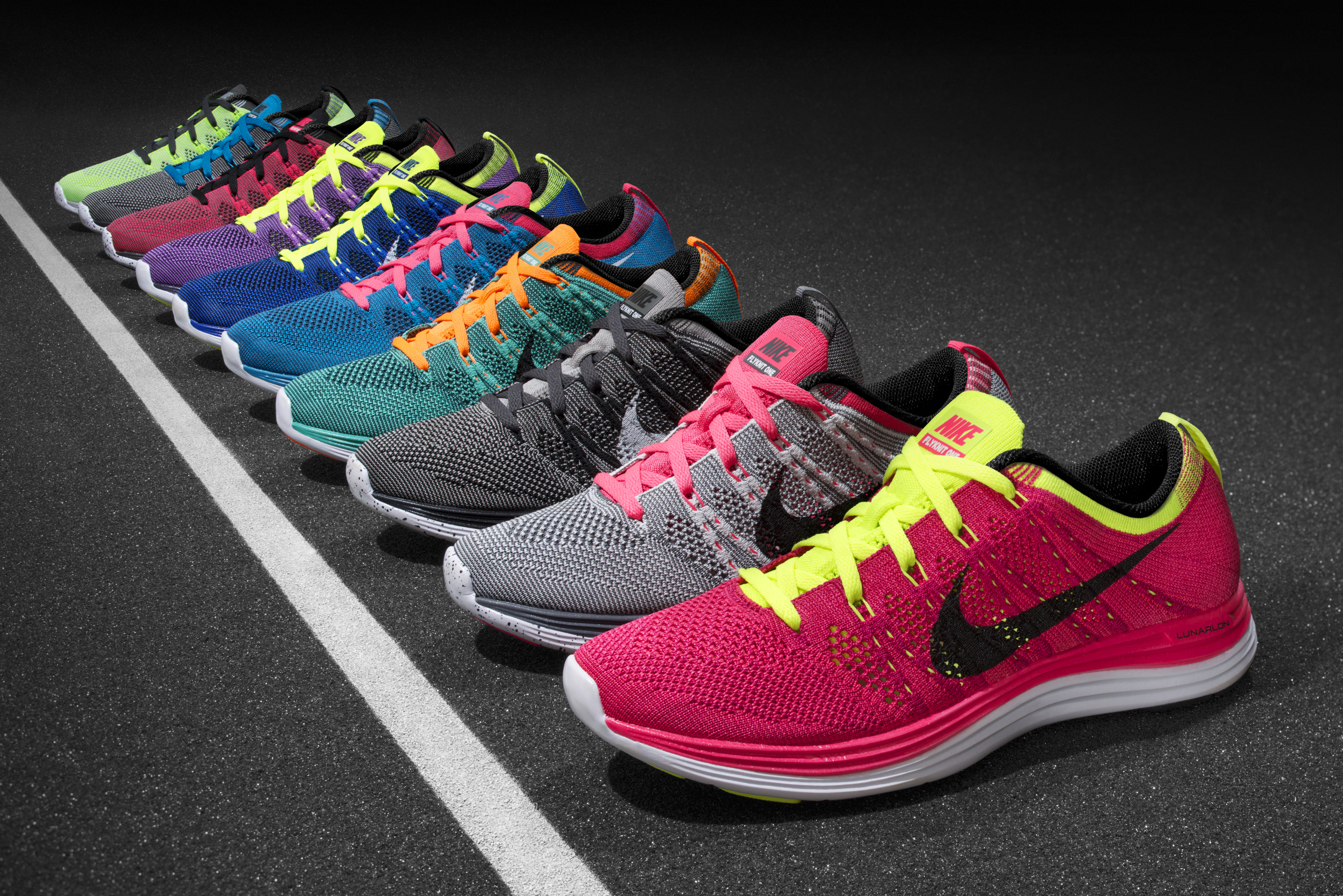
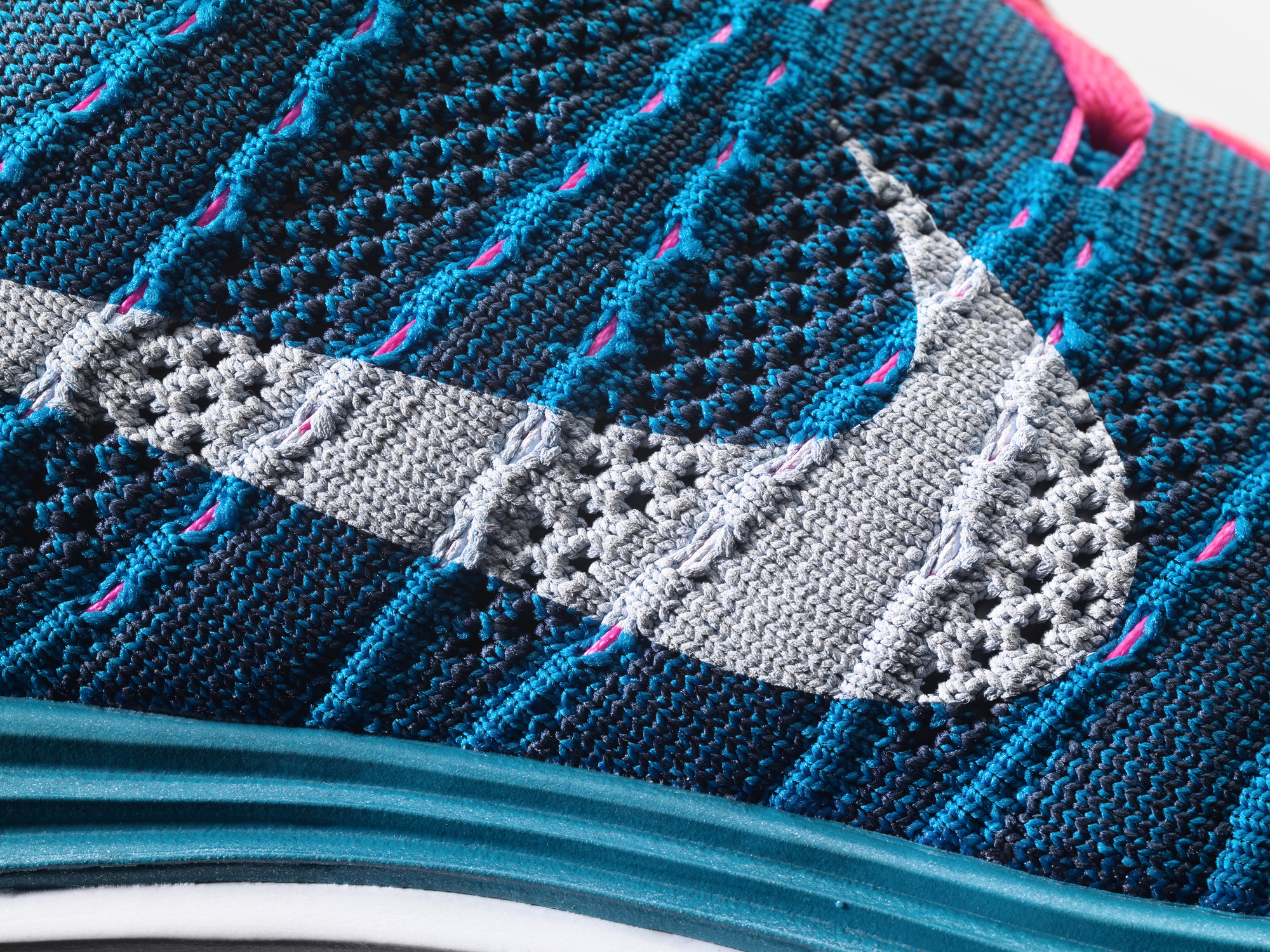
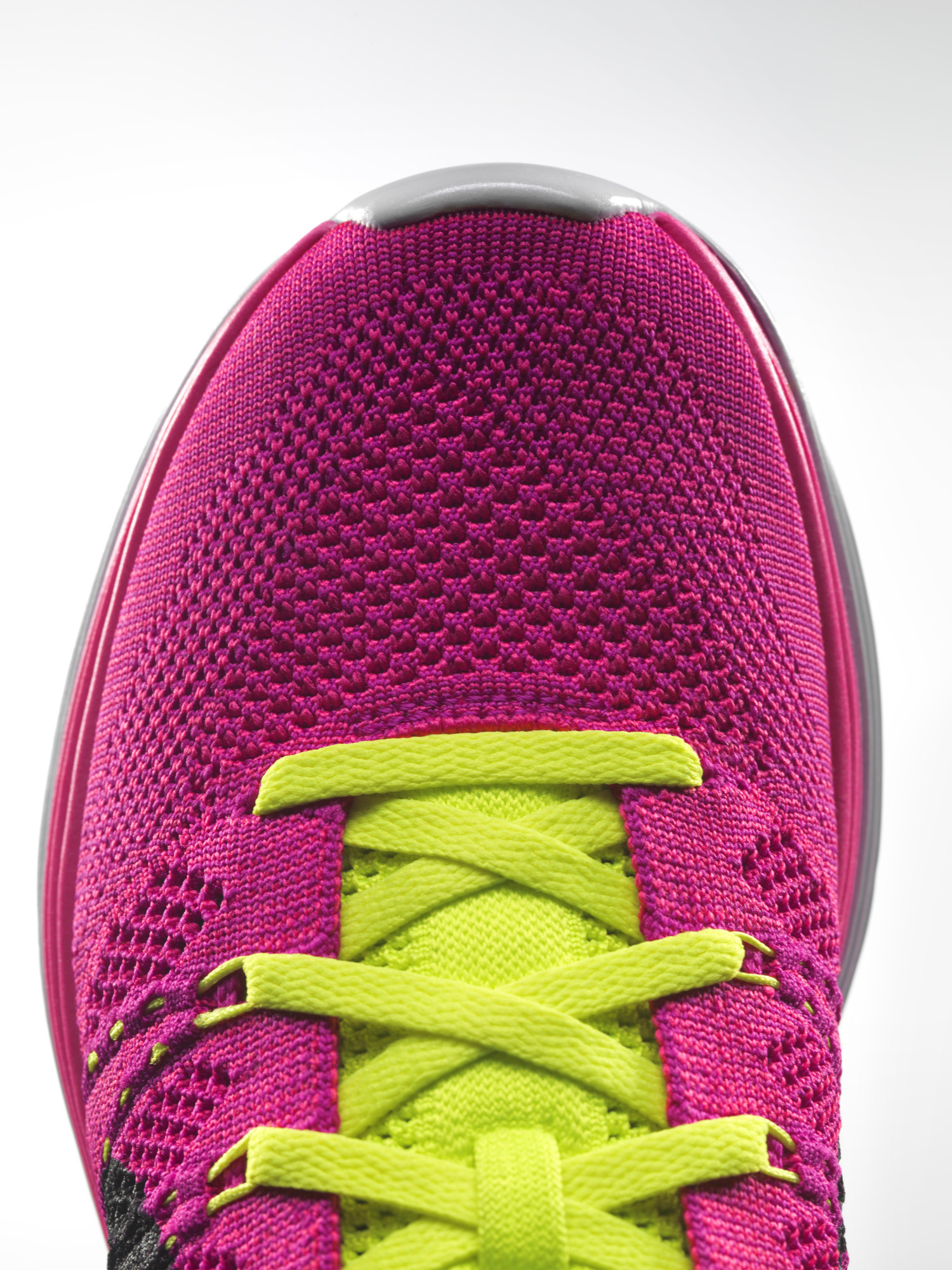
Nike has launched its latest running shoe incorporating its Flyknit seamlessly knitted uppers technology and it looks like being a real winner on all fronts.
Nike Flyknit Lunar1+, which is available from the beginning of February, is said to employ construction methods which reduce waste by an average of 80% when compared to typical Nike running footwear and offer significant benefits to everyday runners.
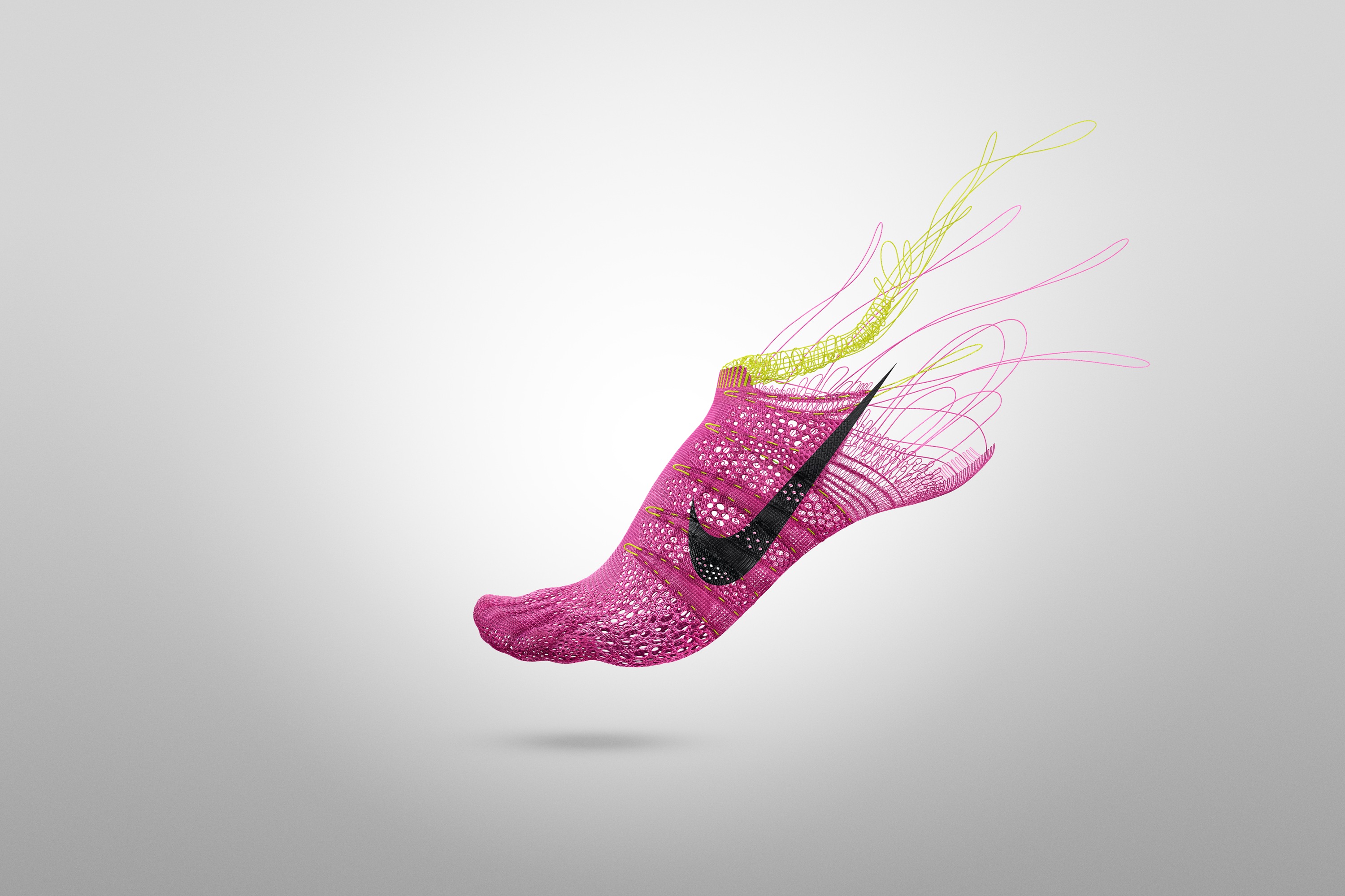
Because the Flyknit uppers are knitted in one piece on flat knitting machines, the construction eliminates the need for the manufacture of multiple fabrics and material cutting employed in manufacturing the uppers of traditional sports footwear. This greatly eliminates cutting waste and allows the knitted shoe upper to drop from the knitting machine in one piece, ready for integration with the sole and other shoe components.

Striving for better performance

Until the launch of Flyknit and similar products, Nike and other sports shoe manufacturers have depended on the cutting and sewing of multiple fabric types, sometimes from multiple global locations, in shoe assembly.
Flyknit not only eliminates cutting waste but also greatly streamlines the overall manufacturing supply chain. Yarns can be now delivered to factories where shoe uppers are knitted and attached to soles and other components to make the complete shoe under one roof. Better still - shoes could be knitted and assembled at the same location where fibres and yarns are actually manufactured.
The average 80% waste reduction claimed by Nike is a huge achievement and comes at a time when the company, like most major clothing and footwear brands, is striving for better performance in its corporate responsibility through the adoption of new greener technologies.
“Athletes push themselves toward higher and higher levels of performance. They want to achieve that breakthrough moment, their personal best. That’s how Nike approaches corporate responsibility. It’s not just about getting better at what we do – addressing impacts throughout our supply chain – it’s about striving for the best, creating value for the business and innovating for a better world,” Nike explains in an article entitled‘Sustainable Business At Nike, Inc.’ on the company’s corporate website.
Nike has recently made the news with the launch of a number of sustainable textiles initiatives. Last year the company announced that it had entered into a strategic partnership with DyeCoo Textile Systems B.V., a Netherlands-based company that has developed and built the first commercially available waterless textile dyeing machines.
By using recycled carbon dioxide, DyeCoo's technology eliminates the use of water in the textile dyeing process. However, the new technology requires innovation in dye and chemical products as the applications expand in order to obtain the high level of colour fastness and performance that consumers demand. In this respect DyeCoo has since announced a partnership with major dyestuffs developer Huntsman Textile effects.
Just less than a year ago Nike announced the launch of the Flyknit revolutionary new running shoe technology which uses state-of-the-art integral knitting techniques to create a one piece upper engineered for precision fit and with the aim of creating the feeling of a second skin for runners.
In what is an absolutely ingenious piece of knitting, the Nike Flyknit upper uses a complex combination of modern flat knitting techniques to create a two dimensional component with built in support which can easily be manipulated into a three dimensional upper for attachment to a sole unit.

Watch the Nike Flyknit Lunar1+ movie . . . 

At the launch the company said that Flyknit revolutionizes running by rethinking shoe construction from the ground up, informed by athlete insights and employing a new proprietary technology.

Expanding the franchise to the every day runner

Nike Flyknit was created for performance in world-class marathon events, and many elite runners have crossed the finish line in the Nike Flyknit Racer, part of the first Nike Flyknit collection. Nike says the Nike Flyknit Lunar1+ expands the franchise to the everyday runner, offering a bright colour palette to make sure runners look as great as they feel on the road.
In a statement yesterday, the Oregon headquartered company said: “Runners lacing up in preparation for the spring race season won’t make sacrifices. They need a shoe that fits perfectly to take on the miles, has enough structure to feel supportive, offers cushioning for amazing comfort – and sports some style on top of it all. With this inspiration, the lightweight Nike Flyknit Lunar1+ brings the virtually seamless upper using Nike Flyknit technology together with the plush, responsive cushioning of Lunarlon.”
Since its launch in February 2012, Nike Flyknit technology has redefined the development and creation of footwear for running with its ability to be engineered to provide a more precise fit for the specific needs of the foot.
Support and structure are knitted into the Nike Flyknit upper, which helps reduce seams, weight and areas of friction and keeps the shoe lightweight.  “This spring the Nike Flyknit Lunar1+ provides support, flexibility and breathability with a more cushioned midsole – a great solution for everyday runners,” Nike said.
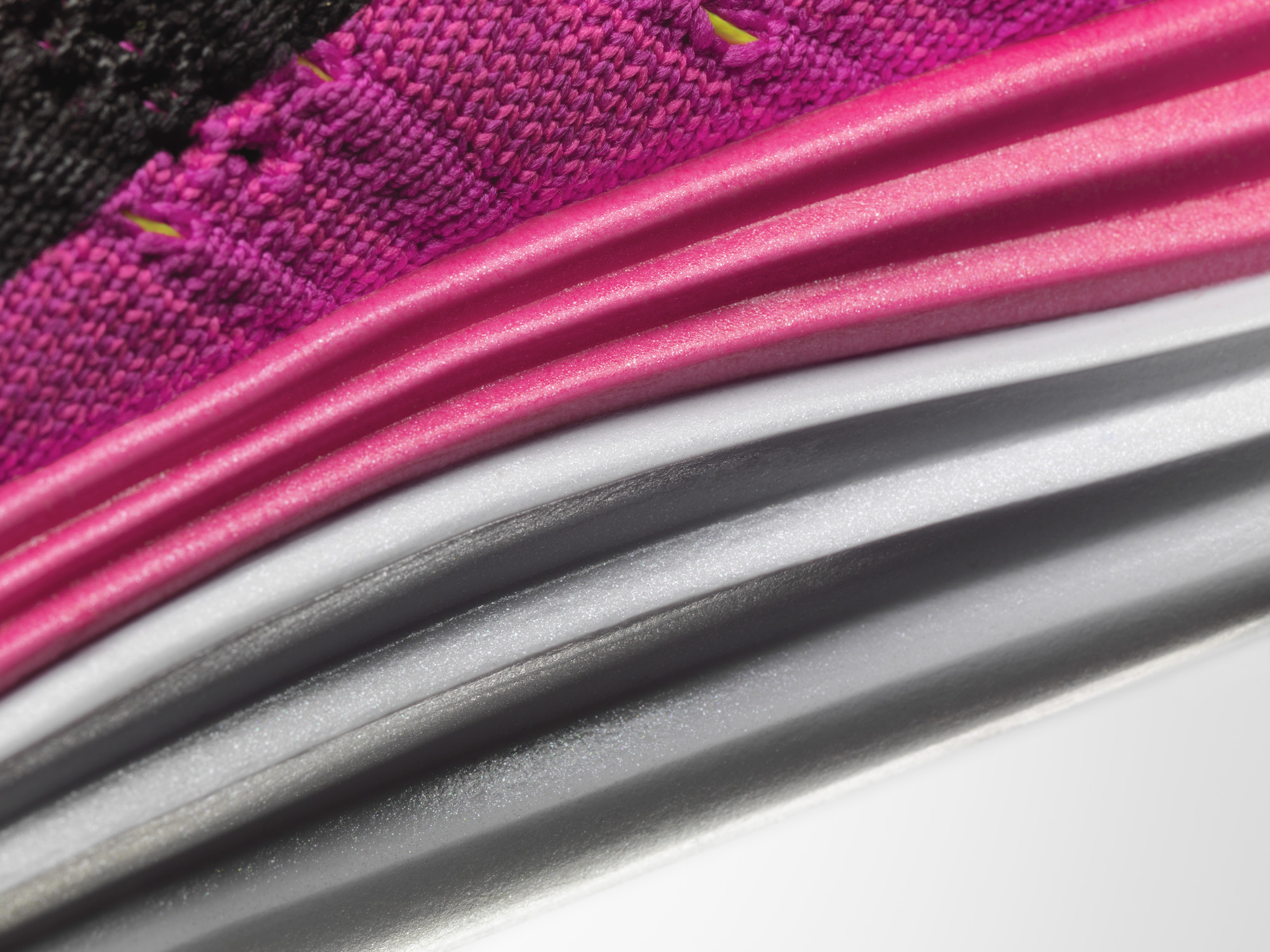
Nike Flyknit Lunar1+ combines Nike Flyknit with plush, responsive Lunarlon, a resilient foam which aims to provide ultra-soft cushioning, and springy response and support. The Nike Flyknit Lunar1+ also has a ‘neutral platform’ that is said to benefit a wide array of runners looking for a responsive and well-cushioned shoe.
Strategically placed durable rubber inserts in the outsole are said to deliver maximum impact protection in key areas on the heel and forefoot and the upper incorporates dynamic Nike Flywire, adaptive support that Nike says tightens and relaxes to accommodate the natural motion of the foot.

Further reading


Courtesy of: http://www.knittingindustry.com/nike-80-less-waste-for-new-flyknit-lunar1/?goback=%2Egde_3992079_member_209203351

Saturday, 1 December 2012

biggani.org Content Links Posted by Shafiul 20121201


shafiul Profile Page
shafiul
Hits 14482
Online Status ONLINE
Member Since 2007/03/15 20:43:35
Last Online 2012/12/01 07:29:28
Last Updated 2010/03/13 19:16:30
 
DateTitleHits
Saturday, 01 December 2012 Textile and Apparel Trade: What's Next in 2006 and Beyond?7
Sunday, 25 November 2012Textile and Apparel Workers' Struggle for Subsistence55
Saturday, 04 August 2012Textile and Apparel Exports/Imports720
Sunday, 01 July 2012Global Textile Fibre Market794
Sunday, 17 June 2012Features Identification of Set Marks in Weaving831
Sunday, 03 June 2012Amazing Visionary Journey of Dr Mizan Rahman 792
Monday, 23 April 2012Pick Spreading with Specific Reference to Set Marks726
Monday, 23 April 2012'নিঃসঙ্গতাই আমার এক ধরনের সঙ্গী'-ড. মীজান রহমান711
Sunday, 26 February 2012Prevention of Set Marks in Weaving941
Saturday, 07 January 2012কোয়ান্টাম সংখ্যাতত্ত্বের জনক2327
Saturday, 10 September 2011স্বপ্ন সঞ্চারী - ড. আবেদ চৌধুরী (♥♪♥)2110
Tuesday, 26 July 2011আলো হাতে স্বপ্ন দেখানো এক শিক্ষক2124
Monday, 04 July 2011বাঁশের আঁশের গবেষণায় নতুন সাফল্য2826
Sunday, 12 June 2011Knowledge Enhancing Stepping Stones1942
Wednesday, 23 March 2011'এগিয়ে যাওয়ার কৌশল'3333
Saturday, 01 January 2011Cloth Fell Control to Prevent Start-up Marks in Weaving2731
Saturday, 25 December 2010Value-added Textile Technology2607
Tuesday, 21 December 2010'Nanotechnology textiles'2786
Monday, 20 December 2010'আমাদের আয়নায় দেখি বাবার মুখ'2656
Monday, 20 December 2010'An innovator who blends traditions with the new'2633
Sunday, 19 December 2010Ever Enthusiastic Dr Abdullah A. Kafi1492
Saturday, 18 December 2010জীবনের গল্প 011 :: মূক্ত বিহঙ্গ2797
Thursday, 16 December 2010সালমা আক্তার, বিভাগীয় সম্পাদক, কৃষি, বিজ্ঞানী.org1432
Wednesday, 15 December 2010সফলদের স্বপ্নগাথা - বিশ্বটাকে বদলে দাও2647
Wednesday, 15 December 2010টেক্সটাইল কলেজ এখন বিশ্ববিদ্যালয়2647
Tuesday, 14 December 2010বিপ্র রঞ্জন ধর, বিভাগীয় সম্পাদক, রসায়নবিদ্যা , বিজ্ঞানী.org1554
Sunday, 12 December 2010মোঃ মাহফুজুল হক, বিভাগীয় সম্পাদক, পদার্থবিদ্যা , বিজ্ঞানী.org1645
Sunday, 12 December 2010Antibiotic Silk Substrates for Healthcare2399
Saturday, 11 December 2010জীবনের গল্প 012 :: হাতের লিখা সুন্দর চান?3121
Friday, 10 December 2010সাদ আব্দুল ওয়ালী , বিভাগীয় সম্পাদক, ছোটদের জন্য বিজ্ঞান, বিজ্ঞানী.org1550
Thursday, 09 December 2010Enhancing Sorption Properties of Natural Fibrous Protein Substrates2508
Tuesday, 07 December 2010মনোজকুমার দ. গিরিশ: অতিথি সম্পাদক, বিজ্ঞানী.org1426
Saturday, 04 December 2010 জীবনের গল্প 013 :: সময় সচেতনতা ও সৃজনশীলতা 2588
Tuesday, 30 November 2010International Textile Innovation Award 20102738
Sunday, 14 November 2010বাংলাদেশের কৃষক বিজ্ঞানী3445
Saturday, 13 November 2010Microwave Irradiation Technique to Enhance Protein Fibre Properties2883
Monday, 08 November 2010আসুন, মায়ের মতো দেশকে ভালোবাসি2680
Sunday, 07 November 2010Sukanto - The Guru of Time Management2828
Saturday, 06 November 2010জীবনের গল্প ১৫ :: বিশ্ববরেণ্য মনীষীর জীবনী 3360
Thursday, 04 November 2010 বাংলাদেশের সামনে অপার সম্ভাবনা2775
Tuesday, 26 October 2010কত দূর উঠতে পারে একজন বাঙালি?1677
Sunday, 10 October 2010Green Engineering: Self-Cleaning NanoTechnology2651
Saturday, 25 September 2010$2M Google Award to Khan Academy2101
Saturday, 11 September 2010Passion for Education & Innovation2456
Saturday, 04 September 2010রবীন্দ্র রচনাবলী & Tagore's Thoughts5678
Saturday, 04 September 2010Smart Intelligent Textiles4594
Sunday, 29 August 2010'গমের জিন-নকশা উন্মোচন খাদ্য ঘাটতি মোকাবিলায় সহায়ক হবে'3065
Monday, 23 August 2010"উদ্ভাবন: পাথরকুচি পাতা থেকে বিদ্যুৎ"5954
Sunday, 22 August 2010"পাটের নৌকায় ফরাসী যুবকের সাগরপাড়ি"3027
Saturday, 14 August 2010US Textile & Apparel Import Spectrum3191
Saturday, 24 July 2010Global NanoTech Education Programs3843
Saturday, 10 July 2010Extreme Engineered Material Design3554
Saturday, 10 July 2010সৌরশক্তির বিমান - Solar-Powered Aircraft4446
Sunday, 04 July 2010Super Strong NanoCrystalline Cellulose Synthesis: Challenges and Opportunities24125
Wednesday, 23 June 2010How Butterflies Create Cute Colors4374
Sunday, 13 June 2010Interfacing Emotion with e-Textiles3683
Saturday, 08 May 2010Canada's Manufacturing Employment Trend 2004-20093928
Saturday, 13 March 2010‘The Scientific Century: securing our future prosperity'2122
Sunday, 07 March 2010Emerging Economy: Dr Jahangir Sultan2478
Sunday, 28 February 2010A Boutique Eco Resort in Bangladesh1445
Sunday, 17 January 2010Teachers' Paradigm4297
Sunday, 17 January 2010Life 2 Love2185
Sunday, 20 September 2009জীবনের গল্প :: Doly's Delightful Dreams2966
Monday, 14 September 2009Meet the Milestone: Dr Amit Chakma, President, UWO3666
Thursday, 23 July 2009জীবনের গল্প 014 :: সমস্যা, সম্ভাবনা ও সমাধান 6076
Saturday, 04 July 2009Methods and Apparatus for Spinning Spider Silk Protein 5408
Thursday, 02 July 2009Global Textile and Clothing Trade Environment: Challenges and Growth Opportunities5465
Wednesday, 01 July 2009An Amazing Autobiography of Dr Atiur Rahman3060
Friday, 06 April 2007এই সপ্তাহের উক্তি2115
Thursday, 15 March 2007সম্ভাবনাময় বস্ত্র ও পোশাক শিল্প: আজিজা রহমান সিলভিয়া10607

shafiul Profile Page
shafiul
Hits 14482
Online Status ONLINE
Member Since 2007/03/15 20:43:35
Last Online 2012/12/01 07:29:28
Last Updated 2010/03/13 19:16:30
 
দেশ: Canada
শিক্ষা: PhD in Textile Science, Engineering & Technology
বর্তমান অবস্থান: Cambridge, Ontario, Canada
স্পেশালিস্ট: Researcher & Technologist specializing in optimizing process-product-structure interrelationships for developing function-focused advanced materials for challenging applications.
আপনার সংক্ষিপ্ত পরিচয়: - Director, Research & Technology, TexTek Solutions: textek.weebly.com
- Editor, biggani.org
- Editor, life2love.weebly.com
- Editor, ourbeautifulplanet.piczo.com
- Royal Chartered Textile Fellow of the Textile Institute International, UK, texi.org
- Past President, Vice-President & Board of Directors; Institute of Textile Science Canada, textilescience.ca
- Member, Canadian Textile Association, Canada
- Life Member, Institute of Textile Engineers & Technologists, ITET, Bangladesh, itet.org
- Life Member, Leeds University Union, LUU
- Member, American Institute of Aeronautics & Astronautics, AIAA, aiaa.org
- Global Parents, Volunteer, UNICEF, unicef.ca

- Profile: linkedin.com/in/shafiul2009
- A significant list of Research Articles and Patents: textek.weebly.com
- Photo by Kabir Hossain, Prothom Alo, Feb :: 2006

Monday, 2 July 2012

Carbon Catalyst for Half a Century


Carbon Catalyst for Half a Century - NYTimes.com

A Conversation With Mildred Dresselhaus

Carbon Catalyst for Half a Century


1948 A tribute at Hunter High School.


CAMBRIDGE, Mass. — Mildred Spiewak Dresselhaus, a professor of physics and engineering at the Massachusetts Institute of Technology, walks with a very large carbon footprint, and in her case it’s a good thing.
Evan McGlinn for The New York Times
M.I.T. Mildred Dresselhaus with a bottle of vapor-grown carbon fiber.
For more than half a century, Dr. Dresselhaus has studied the fundamental properties of carbon — carbon as graphite, the dark, flaky mineral with which our pencils are pointed, and carbon as liquid, the element with the highest melting point in nature; carbon that is insulator one moment, superconductor the next.
She invented breakthrough techniques for studying individual layers of carbon atoms. She discovered ways to capture the thermal energy of vibrating particles at well-defined “boundaries,” and then to use that heat to make electricity.
She devised carbon fibers that are stronger than steel at a fraction of steel’s weight. Her research helped usher in the age of nanotechnology, the wildly popular effort to downsize electronic circuits, medical devices and a host of other products to molecular dimensions.
Dr. Dresselhaus recently won the 2012 Kavli Prize in Nanoscience, a $1 million honor that matches the purse size and Scandinavian provenance of a Nobel, if not quite the status. The new award joins a very long list of laurels, among them the National Medal of Science, the Enrico Fermi Award, the presidencies of the American Physical Society and the American Association for the Advancement of Science, 28 honorary doctorates and a stint in the Department of Energy under President Bill Clinton.
Dr. Dresselhaus has also been a prominent advocate for women in physics and engineering, disciplines that are still short on high-ranking female faces and that were outright hostile to women when she began her career in the late 1950s. Even before entering science, she was well accustomed to hostility and hard times, having grown up impoverished in a rough part of the Bronx.
Today, at 81, the woman nicknamed the Queen of Carbon still works long hours in the lab, publishes prolifically, gives talks around the world and plays violin and viola in chamber groups. Married to a fellow physicist, Gene Dresselhaus, she is the mother of four and grandmother of five, including a granddaughter who is coming to M.I.T. this fall to study nanotechnology.
I spoke with Dr. Dresselhaus in her trapezoid-shaped office, under the vivid presence of a Venezuelan sunburst tapestry that covered much of one wall.
Your parents were immigrants from Poland, and your father often couldn’t find work. You’ve talked about how as a child you had no toys, sometimes no food and a single set of clothes that your mother washed for you each night. Now, with the Kavli award, you’re a bona fide member of the 1 percent club. How does that feel?
You know, It’s a funny thing. Being a scientist, you don’t get a big salary, but it’s more than you need. When you’re busy enjoying what you’re doing, you don’t spend a lot of money. I wasn’t expecting prizes.
You were born in Brooklyn. So how did you end up in the Bronx?
My older brother was a musical prodigy, and he got a scholarship to the Bronx House Music School. We moved to the Bronx when I was 4 to be close to his music school. Then I got a music scholarship myself, at the age of 6, but that was for a school down in Greenwich Village. I had to take the elevated train and then the subway to get there. I can’t tell you how many times I fell down those subway stairs. I was carrying too much, my violin, my schoolbooks. I would trip and lose my balance.
You were traveling downtown on your own at age 6?
The scariest part was coming home and getting off the train in the Bronx, when I had to walk through that dangerous neighborhood. But I survived.
I want to read this little passage about you, when you were Mildred Spiewak. “Any equation she can solve; every problem she can resolve. Mildred equals brains plus fun. In math and science she’s second to none.”
Where did you get that from?
It’s from my mother’s 1948 yearbook for Hunter High School. She was a classmate of yours, although she says she didn’t know you at the time.
Hunter High School was a real turning point for me. I found out about its existence through the music school. Nobody I knew had gone to one of these special high schools, and my teachers didn’t think it was possible to get in. But Hunter sent me a practice exam, and I studied what I needed to know to pass the exam. It was an excellent school with excellent teachers.
By the end you were already known as a science and math whiz. Yet you didn’t think a science career was possible.
At that time there were only three kinds of jobs commonly open to women: teaching, nursing and secretarial work. I went on to Hunter College thinking I would be an elementary schoolteacher.
But then you met Rosalyn Yalow, the future Nobel laureate.
I took her class in elementary nuclear physics. It was a tiny class, maybe 3 students, maybe 10. She was a real leader and a very domineering person. You met her and she said, “You’re going to do this.” She told me I should focus on science. She left the exact science unspecified but said I should do something at the forefront of some area. After that, she was always in my life, writing letters of recommendation for me, keeping up with my progress. She died just a year ago. I was the first speaker at her memorial symposium.
You studied with other scientific giants, like Enrico Fermi.
That was at the University of Chicago, where I did my graduate work, and at the time it was the best university in physics. Fermi was like Rosalyn Yalow in a couple of ways: He had very few students and took a personal interest in all of them. We both lived near the university, and we ended up walking together early in the mornings. He had such a sharp mind. I learned how to think about physics from him.
You did your doctoral research on superconductivity, where electric current flows through a material and the electrons meet almost no resistance, right?
Superconductivity helped broaden my professional phase space. When I started my work, it was already known that magnetic fields could quench superconductivity. I found that the transition was not continuous, that superconductivity was initially enhanced in the presence of magnetic fields, then it would suddenly fall off. That was a little surprising, and so my graduate thesis attracted a bit of attention.
Didn’t you and your husband end up at M.I.T. because it was the one institution without nepotism rules?
M.I.T. and I.B.M. both lacked nepotism rules, and both offered us positions. When I came to M.I.T. in 1960, only 4 percent of the students were female. Today it’s about 40 percent of undergraduates. At Lincoln Lab, they had 1,000 men and two women. But we had a very good boss, and he treated us just like everybody else.
What inspired you to study carbon?
I thought it was an interesting material and it was amenable to the laboratory capabilities we had, in magneto-optics. I also liked having a problem that was not too popular. I had young children at the time. If one day I had to be at home with a sick child, it wouldn’t be the end of the world.
Everybody else was working on semiconductors. They thought carbon was too hard and not a fruitful area of study. The number of papers published on carbon when I started was essentially zero, and it’s been going up, up, up my whole career.
You paved the way for research that yielded two Nobel Prizes, for buckyballs in 1996 and carbon nanotubes in 2010. Do you feel a tiny bit slighted at not being among the winners?
Not at all. In both cases, they had ideas I missed, and they did great work. I’ve received a lot of recognition for my contributions, and I was a special guest at the Nobel ceremony in 2010.
How did you manage a high-powered career with four children?
A good husband is a vital part of it, somebody who understands what you’re trying to do and encourages it. I also had a good baby sitter. She worked for me for 29 years.

Tuesday, 28 February 2012

Airship Technology

 Airship Technology :: Table of Contents


2nd Edition, Published from the Cambridge University Press, UK on 2012 Feb 28

I have coauthored the materials chapter (113-148) of this book:

Airship Technology :: Table of Contents
 ... ...
6             Materials (Shafiul Islam and Peter Bradley)
113
Introduction
113
Desirable Properties for Airship Textile Materials
113
Development of Textiles for Airship Use
118
Properties of Envelope Materials
131
Improved Laminates
140
Emerging Engineered Materials
140
Summary
143
References
144